"Communications methods" as discussed here has two meanings. First, the technology of communication includes the telegraph, the telegraphone, the telephone, and the order board. The second aspect of communications describes how the technology was applied, i.e. the "double order" method of controlling train movements.
The Morse Telegraph
The Morse system of telegraphy was invented by Samuel Finley Breese Morse in the 1840s in the United States. "Morse Code" is essentially a simple way to represent the letters of the alphabet using combinations of long and short pulses. A unique pattern is assigned to each character of the alphabet, as well as to the ten numerals and punctuation. These long and short pulses are translated into electrical signals by an operator using a telegraph key. A skilled operator at the receiving instrument "copies" these electrical signals as letters, numbers, or punctuation. The receiving instrument is called a "sounder". A sounder is a simple "transducer" which converts the electrical pulses into audible clicking sounds which are "copied" by a highly trained telegrapher.
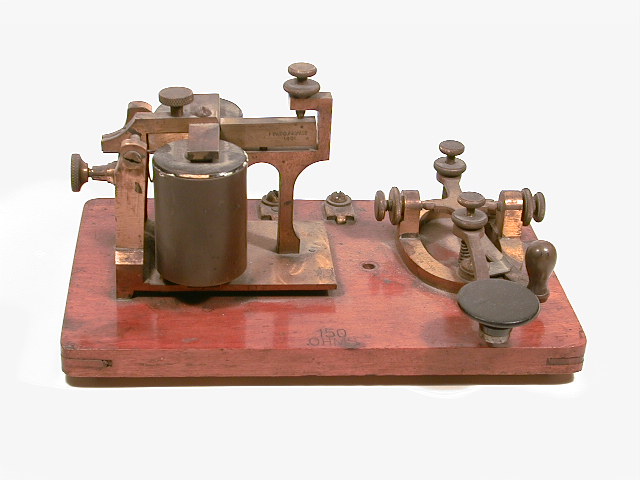
Morse telegraphy became universal in both the United States and Europe due to its simplicity and ability to work on inferior quality wires over hundreds of miles. The simplicity and reliability of the Morse telegraph is probably why railroads continued to use it long after the telephone became a useful instrument for railroad communications. John Norwood comments on the telegraph's role in dispatching: "At Alamosa it was late in the game before telephones were put in service for use in train dispatching. Imposed on wires, many as old as the original stringing, they were not as dependable as Morse."(1)
1. "Rio Grande Narrow Gauge Recollections", page 99, by John B. Norwood. Heimburger House Publishing Company, 1986.