The telegraph was the original means of communication on the railroad. Telegraph lines can be seen in photographs of the newly constructed San Juan Extension as it opened for operation in 1881. It is likely possible that the telegraph was in place before the line was completed, and was certainly used as an important tool in the construction of the railroad.
It is unfortunate that very few photographs were taken of the interior of the depots on the line. These photos would give important clues as to how the telegraph (and telephone) equipment was positioned inside the depot. Some sketches of the interior of the Osier depot were done by former telegrapher and Trainmaster John B. Norwood, and these sketches are being used in the restoration of the depot.
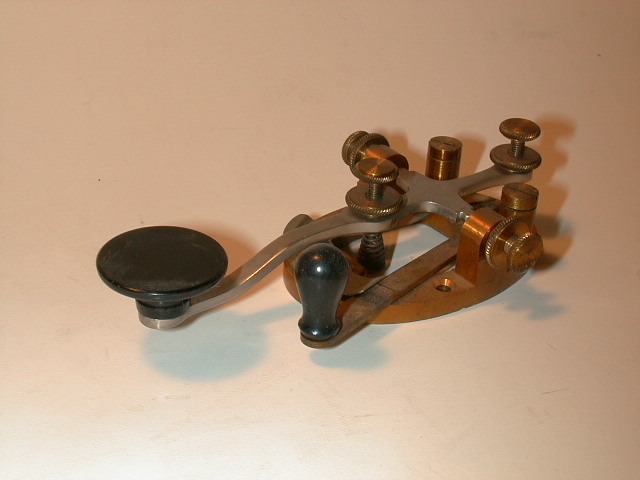
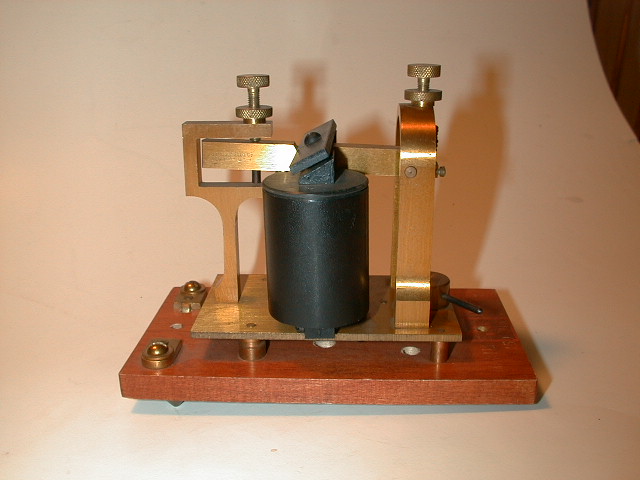
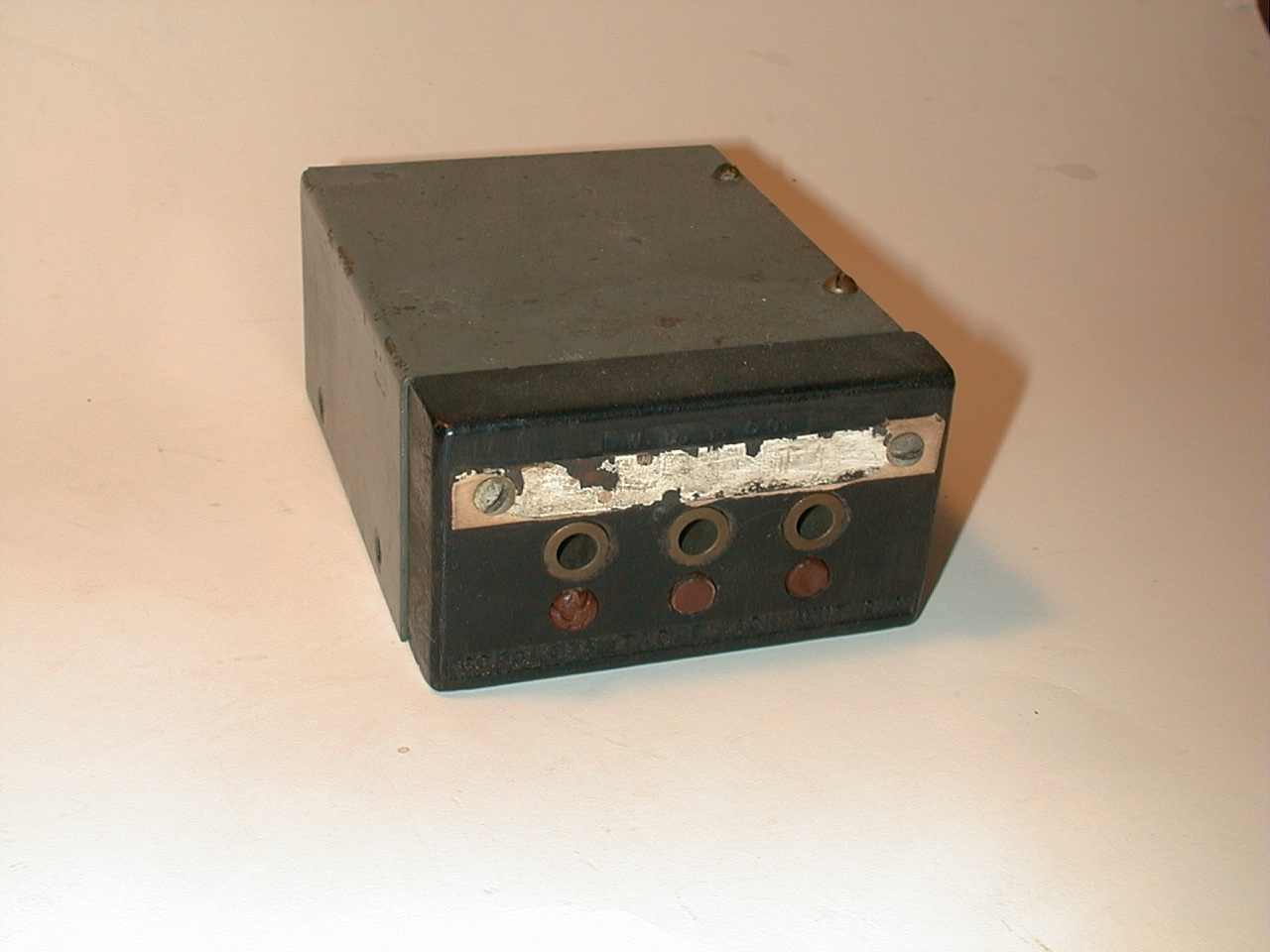
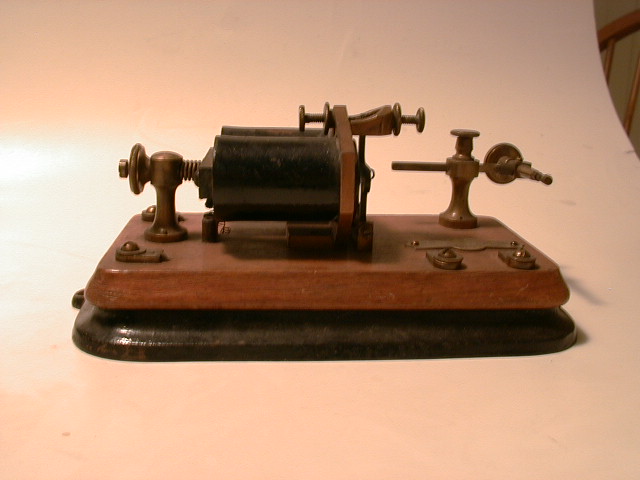
The Colorado Railroad Museum has an excellent display of communication instruments. This includes an operator's position constructed in a replica of a depot bay window, as was typical practice of the time. In addition, glass display cases hold many other telegraph and telephone instruments.This link will take you to a collection of images made at the CRRM in 2003. Click on the thumbnail images for a detailed view.
There is one good photograph (that I know of) showing the interior of the Chama depot. This can be seen in Richard L. Dorman's "Chama/Cumbres with a Little Chili", page 33. In this photograph you can see the telegrapher's desk occupied by telegrapher Roy Ogle, and agent Butch Williams on the job inside the Chama depot. This black-and-white photo has enough detail to make out several telegraph instruments. On a shelf at the left there is seen a typical Morse relay, with a common sounder adjacent to it. In front of the sounder, a rectangular "swing arm resonator" with sounder is clearly visible. Just below the resonator box, there is another typical Morse relay. No telegraph keys are distinguishable. The original negative would be helpful, if it were available. To the right of Operator Ogle can be seen a large handcrank telephone, and what appear to be patchcords and some kind of jackboxes. An electrical lighting circuit looks to be just to the right of the telephone. An enormous pendulum clock typical of that used in Western Union telegraph offices is partially obstructed just to the right of Agent Ogle.
Here is a summary of Ed's recollections of D&RGW Morse equipment:
Greg...Yeah....I remember....
Everyplace except Alamosa had gone to a cordless jackbox setup, with 15B mainline call sounders,and a single 15B mainline sounder in the resonator. Standard Bunnell steel lever keys were in use everywhere. "AS" Alamosa had two positions on the telegraph table in the office in the one story brick yard office building across the street southwest of the old passenger station, and it had two master sets , with standard Bunnell mainline relays, steel lever keys, and 400 ohm local sounders in the resonators.
15B Mainline Sounder by Bunnell
Cordless jackboxes were used, and there were wires terminating there from:
"DE" Del Norte (old Creede Branch & Montevista "MV"; single wire, took battery at Del Norte, long since cut down west of DE to Wagon Wheel Gap and Creede);
"DU" Durango (two wires, took battery from W.U. at Durango until line cut at Chama, then took battery from rectifier at Chama; had offices "NA" Antonito, "JR" La Jara , cut in); There was a "spare" wire that ended at "NA" Antonito, I think it was the old Santa Fe wire that went down the Chili line to Embudo, Espanola, and Santa Fe before the road was torn up.
"WN" Walsenburg (two wires, one through to "SB" Pueblo, one to W.U. at Walsenburg; also had "LV" LaVeta, and "FG" Fort Garland cut in, when open). All these offices except Alamosa & Walsenburg had the old Fahnestock "single Unit" type metal box switchboards at the time I was there. "AS" and "WN" had large metal cabinet, wall mounted switchboards with the big porcelain jack blocks, four high/four wide, and carrying 16 type 200 W.U. jacks in each block. I dont remember the numbers of these wires, if they had any...W.U. wires were probably numbered, but I cannot remember what they were. All these wires were in daily use when I worked there.
Side note....FG Fort Garland was a real neat old station building...The original to the place, and it still had the old kind of wooden Train Order semaphore mast , the kind that stood at "Stop" position, unless the operator hauled down wood handles with a ring at the end inside the office and hooked them in big hooks in the telegraph table in the bay window, to pull the blades at the top of the pole down to the diagonal position or "Clear". Steel cables ran out over pulleys at the tops of the bay window, around pulleys on the mast and up to the semaphore blades. When the operator released the cable handles in the office, large counterweights on the short end of the semaphore blades caused them to rise to the horizontal or "stop" position, by themselves. The lamp at the top of the pole was electrified, but was still the original kerosene lamp.
Ed
A D&RGW "wrecking box", which is a portable telegraph set designed to be used for communications from business cars and wreck sites, has recently been discovered. Follow the link for the story on this artifact from the very early days of the D&RG(W) railroad.