I have little information on telephone equipment. I do know that there were two types of telephones used. The "telegraphone" was designed to be used on telegraph lines. In fact, it was possible to operate both telegraph and telephone simulataneously on the same wire. This is due to the fact that telegraph signals are very low frequency, while telephone voice is higher in frequency. Thus the two types of signalling can be kept seperate using electrical filters. Telegraph lines use only a single wire in combination with the earth to form a closed electrical circuit. This is a disadvantage for telephone circuits, as they will be susceptible to electrical noise from adjacent circuits on the same pole line, electrical motors, power lines, etc. Thus the telegraphone was probably quite noisy and usable only in remote areas such as those found on the narrow gauge.
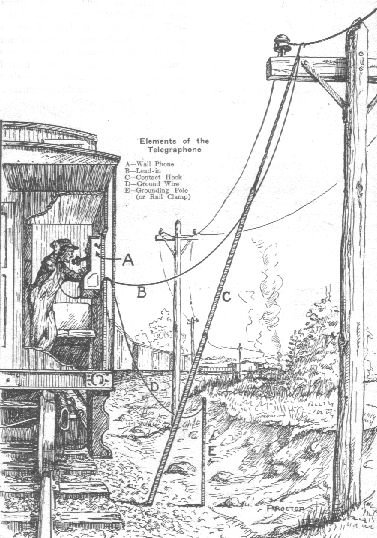
The second type of telephone circuit is similar to a modern telephone. This uses two wires to form the circuit. While this requires more wire and insulators, the circuit is far less susceptible to interference, and is also capable of longer distance circuits. The exact instruments used are not known. What appears to be a pair of early telegraphones has surfaced in an internet report, however, the disposition of these sets is unknown at this time.
A trip to the archives of the Colorado Railroad Museum revealed a small bit of data on the phone modernization on the narrow gauge:From the Alamosa Daily Courier April 1938
New phone communication is expected to eliminate train tie-ups on Cumbres pass during the deep snow period, superintendent of telegraph for the Denver and Rio Grande Western railroad, announced in Alamosa, during a brief visit last night. Installation of the telephone circuit is underway at present.
When the system is ready, it will be possible for the Alamosa dispatcher to communicate with any station between Alamosa and Durango at any hour of the day. The conductor of a train will be able to call Alamosa, Durango or any station between simply by stopping the train at one of the phone depots on the line. If it is necessary to call from a point between stations, he can hook onto the wire and telephone.
Thus, if a train runs into foul weather while going up Cumbres pass, the conductor may telephone ahead, determine whether or not it would be advisable to proceed, and then give his orders accordingly.
In the past year there have been several tie-ups of trains caught by blizzards atop the continental divide on Cumbres.
The new telephone circuit will use telegraph wires already in place on the line. The same wires may be used simultaneously for telegraph or telephone, Hunt said.
Crews are engaged now in going over the line, inspecting the wire and making better installations where necessary. The phone system will be ready by winter.
The dispatcher's office and telegrapher's office in the Alamosa station of the D.&R.G.W. are being rewired as part of a general improvement program, Hunt announced.
Extensive Use of Telephones During 1951 Cumbres Pass Snow Blockade
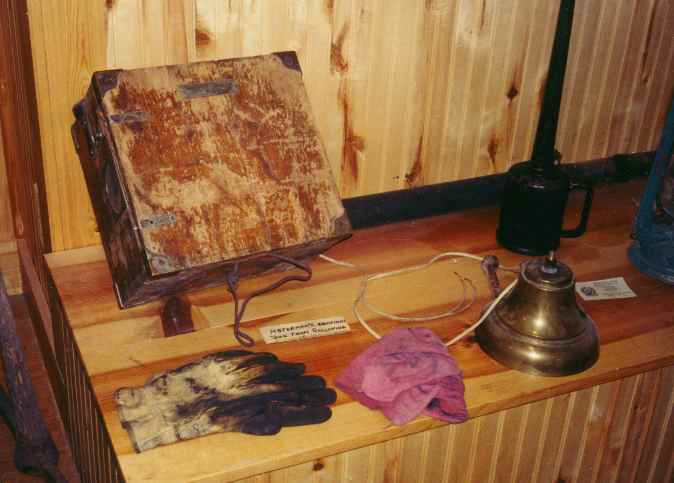
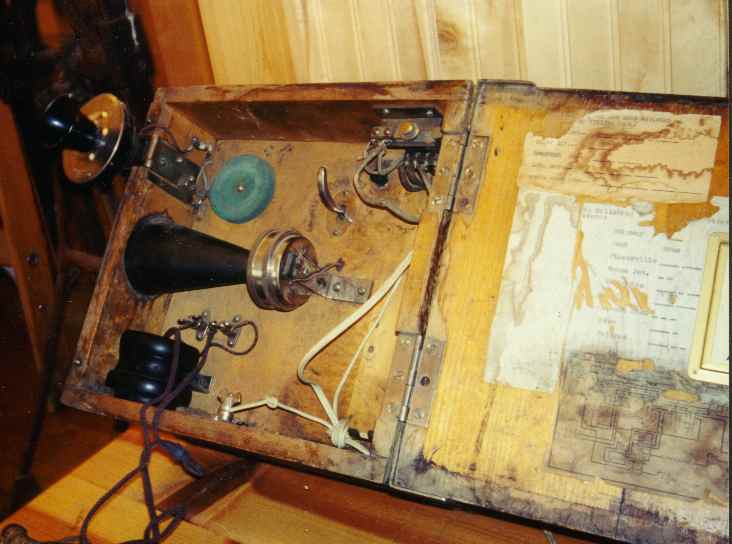
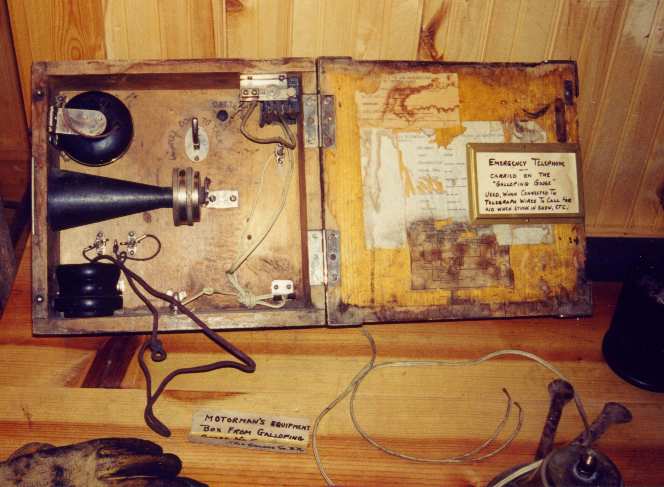
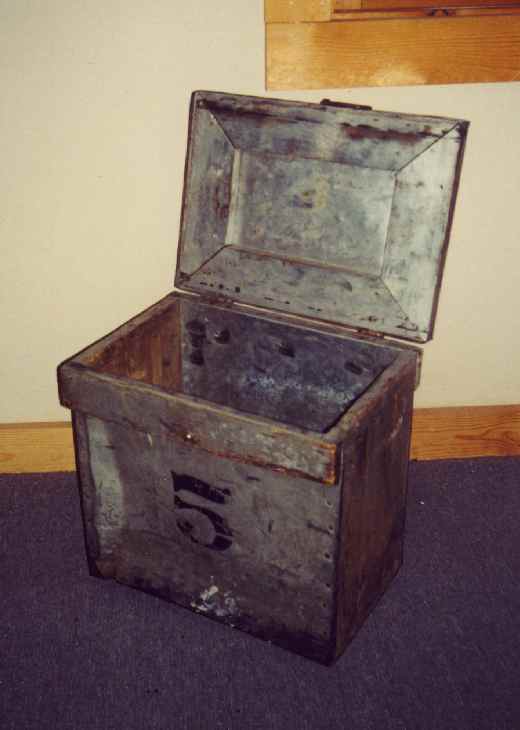
A detailed article published in the October 1969 issue of Trains magazine by John Norwood has numerous mentions of telephone use to coordinate snow clearing activities over Cumbres Pass. "God Made Snow for Farmers and Artists" is a nine page article with every detail of the snowfight of that December and January. The several mentions of the telephone system very likely refer to the system installed in 1937 and described in the above article from the Alamosa Daily Courier.The Rio Grande Southern Railroad, a narrow gauge line located in southwest Colorado was closely associated with the D&RGW. In the 1930s, the railroad constructed and began operating several motorcars which came to be known as the "Galloping Geese". The Geese were equipped with portable telegraphones to be used in case of breakdown or emergency to alert the dispatcher and summon help. Fortunately one of the original portable phone sets was preserved and is displayed at the Galloping Goose Museum in Dolores, Colorado. In August 2001, Bob and Estelle Bergstrom photographed and took notes on this instrument. The following links take you to the photographs.
Goose
Phone Display
Phone Inside View 1
Phone Inside View 2
Box Used to Store Phone on Goose
5
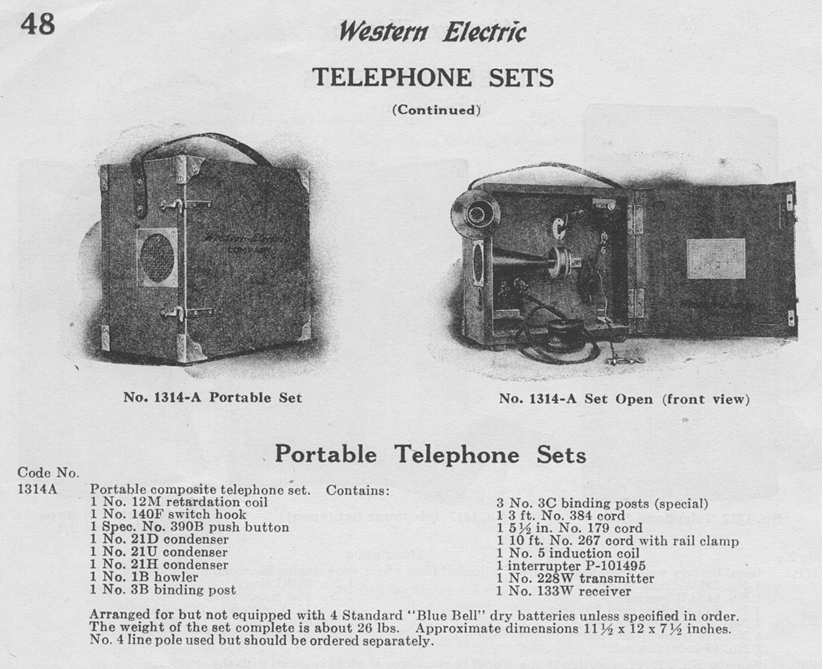
I was able to locate the exact model of this set. The following images are from "Western Electric Railroad Telephone and Selective Apparatus". This is a catalog of all sorts of railroad telephone equipment. Unfortunately the catalog is not dated, but I believe it to be from very early in the 20th century.
Here is the exact type of phone used on the Goose. Note that it comes with a "rail clamp" used to make the ground connection to the rail. This set is specifically designed to be used with grounded circuits, in other words, a telegraph line. Thus this is a true "telegraphone".
The 1314-A Portable Railroad Telephone Set
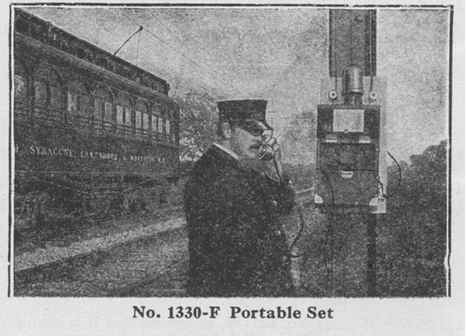
From the same catalog sheet, a conductor using a different model set:
Conductor Using a 1330-F Portable Set
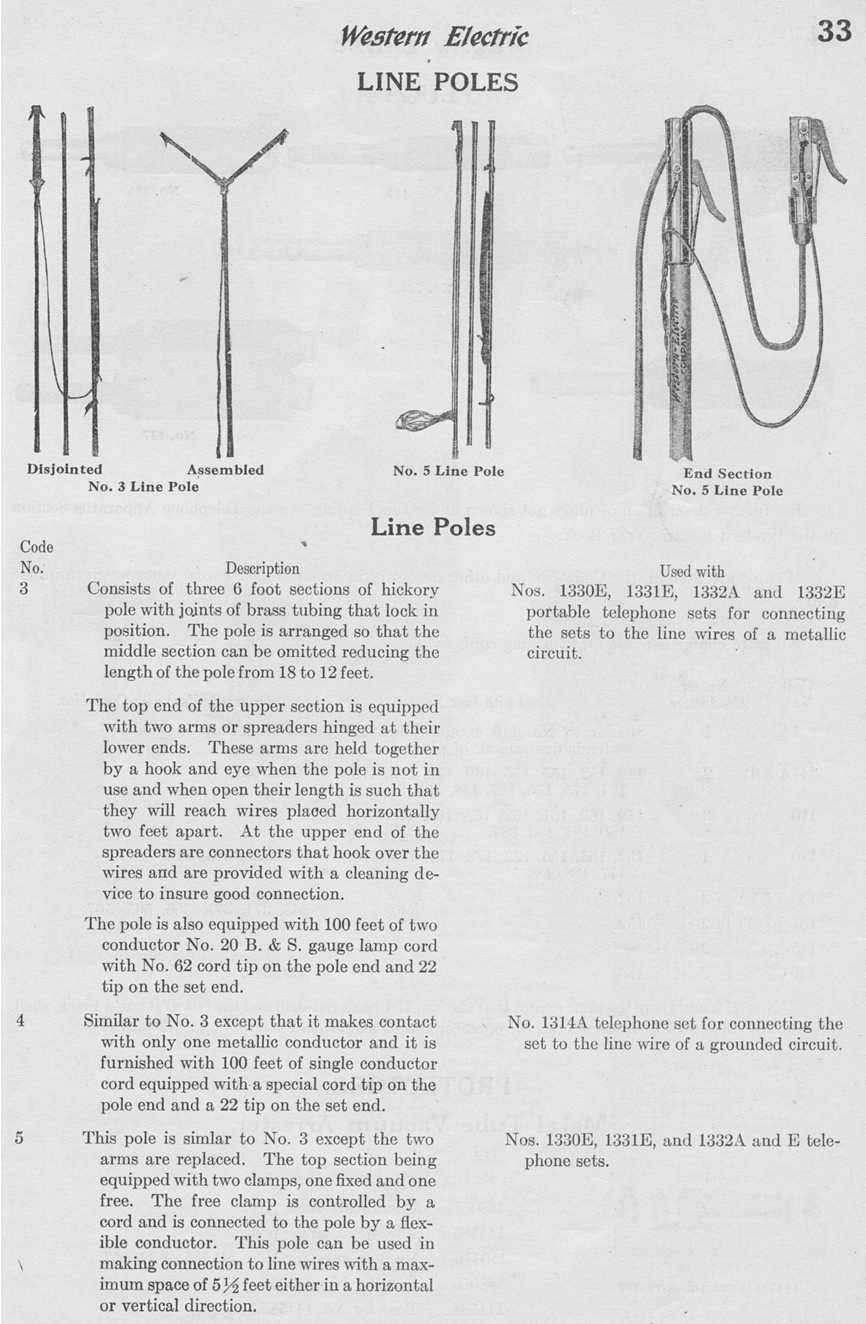
Some type of pole had to be used to connect the telegraphone to the telegraph wire.
The number 4 pole is designed to be used with the 1314A set.
Lines Poles Used with Portable Sets
Estelle Bergstrom took notes on some writing found on the telephone. Here is a summary of her notes.
The property tag reads "PROPERTY OF D.&R.G.R.R. CO."Thank you to Bob and Estelle for their time in documenting this interesting railroad communications device. Also thanks to Wayne Brown, curator of the Galloping Goose Museum and president of the Galloping Goose Historical Society of Dolores, for preserving and displaying it. Here is a link to their web site.
The Galloping Goose Historical SocietyPhone Booths
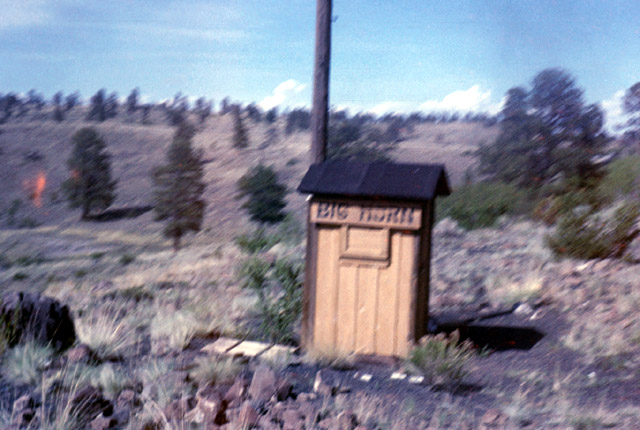
"Phone Booths" were scattered along the line, usually positioned at strategic trouble spots. In addition to the booths, phone boxes could be nailed up anywhere when needed. Railfans rarely photograph such utilitarian facilities. A few images do exist. Here is one from a 1958 fan trip on the D&RGW narrow gauge. This rare image is from the collection of Gary Waite.
Several of these booths remain on the preserved Antonito to Chama portion of the line. These booths are undergoing restoration by the "Friends of the Cumbres and Toltec Scenic Railroad" in recognition of their importance in the operation of the railroad.